Struggles are part of all of our lives. This time, many college students are struggling with school related areas such as studying for finals, planning vacations, and looking for summer jobs. Others may have family issues, relationship problems, or financial difficulties. Whatever the struggles are, no two people are experiencing the same situation and ,therefore, don't know the other's story.
In today's society, many people make an attempt to turn their own experiences into the same situation someone else is dealing with in order to help. I will be the first to admit that I have done this and I now realize that this may not be the best approach in helping with another's struggles. Unless the bond between the two of you is extremely strong, everything may not be able to be talked about and all the facts may not be presented. In cases when you're a bystander, situations like this may have you judging and assuming what the other person is experiencing and going through. I had a tendency to do this, but I have gotten much better at this. I don't know everything that goes on in someone else's life, and I definitely do not expect to. If I am asked to provide my perspective and help then I will, otherwise I make an attempt not to "judge the book by its cover." It's not fair to put myself in another's shoes when I have not shared the same experiences to form opinions.
To lighten the mood...
Before you judge someone, walk a mile in their shoes. Then when you judge them, you'll be a mile away and have their shoes :)
Why would you wanna walk in someone else's shoes? They might not fit!
Monday, May 14, 2012

Hamline Inequality
One of Hamline's greatest qualities is its unique diversity. Hamline prides itself on being a very diverse university and is located in a very diverse neighborhood. However, with diversity come inequality. The inequality factor may not be as noticeable at Hamline to some, but I can definitely see it.
Three topics of inequality outlined in the sociology book were social class, race and ethnicity, and sex and gender. Social class may be the most difficult to view, but it ultimately may have the greatest effect on Hamline's student body. Hamline's liberal arts education has a great reputation, but also is very expensive. There are students here that have parents with deep pockets who are able to finance entire educations without feeling the burden. On the other end of the spectrum, there are students who are barely managing to make ends meet and pay for their education. Luckily, Hamline has a great scholarship and loan program that will help all students be able to afford and receive the excellent liberal arts education that they all deserve.
Race and ethnicity have been the topic of inequality I had the least amount of exposure to coming from a small town. I was hardly exposed to those of different race and culture than my own while living in Windom. Coming to Hamline has exposed me to MANY!!! different races and cultures. Here I have learned the beliefs and way of life of a few students, taping into what their daily lives consist of and the obstacles they must overcome. From my experiences, I have seen little, if any, racial discrimination while at Hamline, something I am very proud to be a part of. Although racial discrimination is a worldwide problem that will never be solved, we can attempt to solve it here at home.
Sex and gender is another topic I didn't have a ton of exposure to. Males and females were predominately treated equal, from what I saw anyway. I was never exposed to those who viewed themselves as LGBTQ, but that quickly changed when I arrived at Hamline. I wasn't sure how I would react to those sharing different beliefs in this area than me, but throughout the process I have developed friendships with them and have learned much about them. Their beliefs and attributes may be different than me and what I'm accustomed to, but they're people just like me. We're all equal.

Sunday, May 13, 2012
I Love You, Man
I Love You, Man is a great movie. Just throwing that out there! The plot line and characters are intriguing and although random at some points in time, flow together to create a great male bonding flick. Looking past this, I noticed that the character of Sydney Fife is very much portrayed as a social deviant.
Sydney Fife, played by Jason Segal, is indeed a very interesting character. He is first introduced at a real estate open house and he admits that he is only attending in an effort to chill in expensive houses, get free food, and pick up divorced women. He also enjoys taking frequent walks with this dog on the beautiful Santa Monica pier, never failing to let his dog "do his business" wherever he pleases. "It's just nature taking it's course," he tells those unlucky enough to walk through the droppings. Although living in California, Sydney wears long sleeved dress shirts, camo cut off shorts, and Ugg boots (most definitely not typical California apparel). At his best friend's engagement party, he gives the lucky couple a toast. However, he goes on to state, with all relatives present, that his friend's fiance fails to perform oral sex on him enough. He later takes $8000 from his best friend as a loan to put up scandalous billboards of his friend, in an effort to increase publicity for his real estate company.

Clearly, Sydney is made out to be a deviant in this movie. Deviance, by definition, refers to socially disapproved behavior or the violation of agreed-upon norms of society. I don't see Sydney as a deviant, though. He is just a normal guy expressing his individuality in his own unique way. Although his behavior and antics clearly do against social norms, he believes this behavior is normal and, therefore, acceptable. One day, Sydney's behavior may be viewed as normal and those involving themselves in behavior that are normal today will be attributed as deviant. Let's hope that never happens!
Defining Moments
I attended my younger brother's high school graduation this past weekend, and I quickly took notice to the speech directed to the senior class. Mr. Joyce, a social studies teacher, was chosen to deliver the last message to the seniors before they received their diplomas.
Joyce spoke of the defining moments he shared with the senior class. His first class he ever taught at Windom was with this group of seniors, then 7th graders, and he shared that as one of his defining moments that have shaped him to be the teacher he is today. During the speech, I began to think what defining moments shaped me and helped form my identity. I think of the opportunity to be brought up to the varsity level in high school as a freshman and sophomore to be an important moment in my development as an athlete. Never would I have though that I would be playing sports in college, only in my wildest dreams. A little moment in second grade may have well influenced by progression as a student. Being one of only four students admitted to the "Challenge Program," there was a standard set early in my educational process that I have the ability to be a very good student and I should do anything possible to exceed this expectation.
His speech touched many, as I could tell looking around at nearby faces in the crowd. His words of persistence, reaching for the stars, and a chip-on-the-shoulder attitude will no doubt propel many seniors, and audience members as well, to fulfill their craziest ambitions and to chase their dreams. Robert Griffin III, the recent #2 pick in this year's NFL draft, is a prime example of this. Struggles throughout his life have aspired to being named the Heisman Trophy winner in college football last season. Griffin once dreamt of winning this prestigious trophy and being drafted in the NFL, and now this is all true. His RG3, however, takes Joyce's message to the next level. Griffin said, "Don't just go chase your dream. Go catch your dream." He wore his motto proudly on his socks during the draft day festivities.
 My question to you is, what moments define you?
Joyce spoke of the defining moments he shared with the senior class. His first class he ever taught at Windom was with this group of seniors, then 7th graders, and he shared that as one of his defining moments that have shaped him to be the teacher he is today. During the speech, I began to think what defining moments shaped me and helped form my identity. I think of the opportunity to be brought up to the varsity level in high school as a freshman and sophomore to be an important moment in my development as an athlete. Never would I have though that I would be playing sports in college, only in my wildest dreams. A little moment in second grade may have well influenced by progression as a student. Being one of only four students admitted to the "Challenge Program," there was a standard set early in my educational process that I have the ability to be a very good student and I should do anything possible to exceed this expectation.
His speech touched many, as I could tell looking around at nearby faces in the crowd. His words of persistence, reaching for the stars, and a chip-on-the-shoulder attitude will no doubt propel many seniors, and audience members as well, to fulfill their craziest ambitions and to chase their dreams. Robert Griffin III, the recent #2 pick in this year's NFL draft, is a prime example of this. Struggles throughout his life have aspired to being named the Heisman Trophy winner in college football last season. Griffin once dreamt of winning this prestigious trophy and being drafted in the NFL, and now this is all true. His RG3, however, takes Joyce's message to the next level. Griffin said, "Don't just go chase your dream. Go catch your dream." He wore his motto proudly on his socks during the draft day festivities.

The Old Saying
The old saying "It's not what you know, it's who you know" presented itself as a sociological topic while reading about social class inequality. Social class, whether we like it or not, has the ability to push us in one direction or another when it comes to opportunities in society. The stratification lines distinguish one class from another, and with it, opportunities and exposure as well.
Ideals of hard work will get you to a place you want to be isn't going to be prevalent in the future. In more and more cases, low social background individuals are being overlooked for pistons in the workforce by interview teams, who instead turn their attention to the high class individuals with influential parents. Eventually, the children of higher class individuals will have a much higher advantage in the workforce competition than those of lower class parents. This eliminates the idea so ingrained into many children's minds at a young age, that they can be anything they want to be. Hardworking, diligent individuals born into low class families have a much lower chance to be hired in high profile job setting. Parents are now faced with a tough decision, do I tell my child that they may not be able to be in a successful job because of our social background? This is entirely unfair because everyone should have equal opportunity to prove their worth and ability in a job setting. High qualified job applicants are passed up to make room for the CEO's golf buddy's son, who has limited experience in the field. Is this what society has become? If so, we may be in trouble.
Social background will be the eventual criteria that determines who will get the job, not the old-fashioned ideals of hard work and personal sacrifice.
Rooney Rule
One sociological topic that was addressed in detail was the topic of racial discrimination. Racial discrimination will take place no matter what happens, but there are many organizations and groups fighting to make racial injustice a thing of the past. The National Football League (NFL) implemented a rule in an effort to eliminate an unbalanced ratio of minorities and whites in high-profile positions.
The Rooney Rule was created by the NFL in 2003 and requires a team to interview minority candidates for head coaching positions, as well as front-office jobs within the organization. The majority of the cases have to do with the hiring of head coaches. This rule has created many opportunities for minority coaches, as rates have climbed dramatically since the implication of the rule. Mike Tomlin, an African American coach, was hired by the Pittsburgh Steelers and soon led them to a Super Bowl title. Ironically, the Rooney Rule is named after Dan Rooney, the owner and chairman of the Steelers.
 Unfortunately, there have been a few cases in which the Rooney Rule has been implicated against the stated ideals. In 2003 the Detroit Lions were fined for failing to interview a minority candidate after their previous coach was fired, and Steve Mariucci, a white coach, was immediately hired. The Lions appealed their fine after saying that they attempted to interview African American coaches; however, they declined the interviews in part because the hiring of Mariucci was inevitable. In a more recent case, the New Orleans Saints were looking for an interim coach to replace Sean Payton, who was suspended for the 2012-2013 season. Payton's choice for his replacement was his mentor, Bill Parcells. Parcells is a Hall of Fame coach with a long legacy in the NFL. However, this potential hiring caused some uproar in regards to complying with the Rooney Rule in the same way as the Lions case.
There have been cases in which the Rooney Rule has been used in the way it was intended to be and in which the spirit of the rule has been challenged. In my person opinion, I believe this is a great rule but their needs to be accountability for those who fail to abide by the rules in the correct manner. There have been countless cases of success for an organization after hiring a minority coach and the rate keeps going up. The teams that fail to abide by the correct means of the rule have compromised the integrity of the rule and have unfairly not given a minority candidate an opportunity to be a head coach, even if he is highly qualified. The league needs to create stricter guidelines on this rule because I am a firm believer that minority candidates have the exact same possibility for success as a white coach.
The Rooney Rule was created by the NFL in 2003 and requires a team to interview minority candidates for head coaching positions, as well as front-office jobs within the organization. The majority of the cases have to do with the hiring of head coaches. This rule has created many opportunities for minority coaches, as rates have climbed dramatically since the implication of the rule. Mike Tomlin, an African American coach, was hired by the Pittsburgh Steelers and soon led them to a Super Bowl title. Ironically, the Rooney Rule is named after Dan Rooney, the owner and chairman of the Steelers.

There have been cases in which the Rooney Rule has been used in the way it was intended to be and in which the spirit of the rule has been challenged. In my person opinion, I believe this is a great rule but their needs to be accountability for those who fail to abide by the rules in the correct manner. There have been countless cases of success for an organization after hiring a minority coach and the rate keeps going up. The teams that fail to abide by the correct means of the rule have compromised the integrity of the rule and have unfairly not given a minority candidate an opportunity to be a head coach, even if he is highly qualified. The league needs to create stricter guidelines on this rule because I am a firm believer that minority candidates have the exact same possibility for success as a white coach.
Sociology in Everyday Life
Throughout this semester, I have learned many different aspects that go into studying sociology. I never realized how broad of a spectrum sociology covers. Any behavior by humans essentially falls into potential study subjects under the topic of sociology! I am very grateful I took this class and was able to explore and broaden by horizons in the way I look at human behavior.
During this semester, I have seen a change in my behavior in regards to society and how I wish to perceive myself. Topics such as race inequality, social and political structures, and social deviance have come up many times in conversation and the knowledge I have gained through this course has propelled me to voice my opinions with others much more than I used to. Becoming more comfortable in settings where these topics are being discussed has been a key aspect of my process in sociological learning this semester.
I also have started to construct a more visible identity of who I am and who I wish to be. Socialization has showed me what society wants me to be. Although I have made an attempt to adapt to a persona of what society demands of me, I have always struck out on my own and formed the identity that I want to be seen.
Parents, teachers, friends, and family all have different views of what they wish us to be in society. However, none of that matters if our own vision of "self" isn't what we want. We are the ones who make choices in an effort to form our identity and although others may influence us, it's ultimately our decision how to create who we are. Our stepping stones in this process shows a prime example of how sociology is in every aspect of our life, whether we know it or not.
Sunday, May 6, 2012
Values Passed on Through Generations
Something that I wish I knew more about was my heritage. I have a general idea of where I came from, but I unfortunately do not know the story behind the many generations of immigrants that make who I am today. I do know that on my mother's side I am Native American, and on my father's side I am Irish.
From the obstacles those with related lineages have had to endure over time I can form a general idea of the struggles my ancestors had to deal with during the immigration process. The Native Americans and the Irish both had an extremely difficult transition into the American way of life, but I believe the sacrifices and adversity my ancestors had to overcome to thrive in society has bettered me to overcome the struggles in my life.
As I said before, I am Native American on my mother's side. My grandma is a member of the Red Lake Band of Ojibwe from Red Lake, MN. I have been exposed to my Native American heritage through traditional Ojibwe meals, as well as trips to the reservation to take in pow-wows and other aspects of the culture. As we all know, Native Americans were forced off their land by European settlers and this was true for the Ojibwe of Red Lake as well. In 1889, the Red Lake reservation covered over 5000 square miles. Today, that number has dwindled to only approximately 1200 square miles. The present Red Lake reservation is entirely owned by the tribe, which is rare among Minnesota reservations. The Red Lake tribe of Ojibwe was the first tribe and reservation to have its own license plates. I proudly display one of these license plates in my room as one of countless symbols of my love and appreciation of my Ojibwe heritage.

On my father's side, I am Irish, that is basically all I know family-wise. When my ancestors came to the United States, they changed their name from O'Riordan to Riordan. This was a common practice for Irish immigrants coming to this country because the Irish were not well respected on their arrival in America. Many Irish immigrants came to America to work; however, they weren't greeted with open arms. The Irish took many jobs that were considered crap and were treated as scum. Poverty was a given for these immigrants, many of whom were forced to live together in "shanty-like" towns with little shelter and sanitation. Even though the prejudice faced in America was great, it failed in comparison to the centuries of oppression put on by the English because of the predominantly Catholic religious beliefs and other aspects the Irish believed in. This Irish-American ballad tells the story of the English oppression felt by the Irish.
"Skibbereen"

As I have come to know, my ancestors on both sides of my family dealt with great oppression and hardships to make something of themselves. I take great pride in being a descendant of those who are hardworking, family and faith orientated, and persistent. Each of these aspects of life displayed by my ancestors has found its way into how I live my life today. Without my ancestors, I would not be the person I am today.
From the obstacles those with related lineages have had to endure over time I can form a general idea of the struggles my ancestors had to deal with during the immigration process. The Native Americans and the Irish both had an extremely difficult transition into the American way of life, but I believe the sacrifices and adversity my ancestors had to overcome to thrive in society has bettered me to overcome the struggles in my life.
As I said before, I am Native American on my mother's side. My grandma is a member of the Red Lake Band of Ojibwe from Red Lake, MN. I have been exposed to my Native American heritage through traditional Ojibwe meals, as well as trips to the reservation to take in pow-wows and other aspects of the culture. As we all know, Native Americans were forced off their land by European settlers and this was true for the Ojibwe of Red Lake as well. In 1889, the Red Lake reservation covered over 5000 square miles. Today, that number has dwindled to only approximately 1200 square miles. The present Red Lake reservation is entirely owned by the tribe, which is rare among Minnesota reservations. The Red Lake tribe of Ojibwe was the first tribe and reservation to have its own license plates. I proudly display one of these license plates in my room as one of countless symbols of my love and appreciation of my Ojibwe heritage.
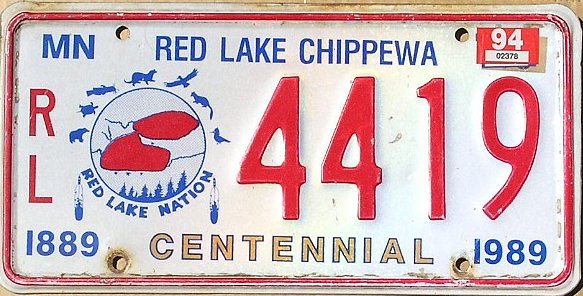
On my father's side, I am Irish, that is basically all I know family-wise. When my ancestors came to the United States, they changed their name from O'Riordan to Riordan. This was a common practice for Irish immigrants coming to this country because the Irish were not well respected on their arrival in America. Many Irish immigrants came to America to work; however, they weren't greeted with open arms. The Irish took many jobs that were considered crap and were treated as scum. Poverty was a given for these immigrants, many of whom were forced to live together in "shanty-like" towns with little shelter and sanitation. Even though the prejudice faced in America was great, it failed in comparison to the centuries of oppression put on by the English because of the predominantly Catholic religious beliefs and other aspects the Irish believed in. This Irish-American ballad tells the story of the English oppression felt by the Irish.
"Skibbereen"
- O, father dear I oftimes hear you speak of Erin's Isle
- Her lofty scenes, her valleys green, her mountains rude and wild
- They say it is a lovely land wherein a prince might dwell
- So why did you abandon it, the reason to me tell
- My son, I loved my native land with energy and pride
- Till a blight came over all my crops and my sheep and cattle died
- The rents and taxes were to pay and I could not them redeem
- And that's the cruel reason why I left old Skibbereen
- 'Tis well I do remember that bleak November (/December) day
- When the bailiff and the landlord came to drive us all away
- They set the roof on fire with their cursed English spleen
- And that's another reason why I left old Skibbereen
- Your mother, too, God rest her soul, lay on the snowy ground
- She fainted in her anguishing seeing the desolation round
- She never rose, but passed away from life to immortal dreams
- And that's another reason why I left old Skibbereen
- Then sadly I recall the days of gloomy forty-eight.
- I rose in vengeance with the boys to battle again' fate.
- We were hunted through the mountains as traitors to the queen,
- And that, my boy, is the reason why I left old Skibbereen.
- Oh you were only two years old and feeble was your frame
- I could not leave you with my friends for you bore your father's name
- So I wrapped you in my cóta mór at the dead of night unseen
- And I heaved a sigh and I said goodbye to dear old Skibbereen
- well father dear, the day will come when on vengeance we will call
- And Irishmen both stout and tall will rally unto the call
- I'll be the man to lead the van beneath the flag of green
- And loud and high we'll raise the cry, "Revenge for Skibbereen!"
- O, father dear I oftimes hear you speak of Erin's Isle
- Her lofty scenes, her valleys green, her mountains rude and wild
- They say it is a lovely land wherein a prince might dwell
- So why did you abandon it, the reason to me tell
- My son, I loved my native land with energy and pride
- Till a blight came over all my crops and my sheep and cattle died
- The rents and taxes were to pay and I could not them redeem
- And that's the cruel reason why I left old Skibbereen
- 'Tis well I do remember that bleak November day
- When the bailiff and the landlord came to drive us all away
- They set the roof on fire with their cursed English spleen
- And that's another reason why I left old Skibbereen
- Your mother, too, God rest her soul, lay on the snowy ground
- She fainted in her anguishing seeing the desolation round
- She never rose, but passed away from life to immortal dreams
- And that's another reason why I left old Skibbereen
- Then sadly I recall the days of gloomy forty-eight.
- I rose in vengeance with the boys to battle again' fate.
- We were hunted through the mountains as traitors to the queen,
- And that, my boy, is the reason why I left old Skibbereen.
- Oh you were only two years old and feeble was your frame
- I could not leave you with my friends for you bore your father's name
- So I wrapped you in my cóta mór at the dead of night unseen
- And I heaved a sigh and I said goodbye to dear old Skibbereen
- Well father dear, the day will come when on vengeance we will call
- And Irishmen both stout and tall will rally unto the call
- I'll be the man to lead the van beneath the flag of green
- And loud and high we'll raise the cry, "Revenge for Skibbereen!"

As I have come to know, my ancestors on both sides of my family dealt with great oppression and hardships to make something of themselves. I take great pride in being a descendant of those who are hardworking, family and faith orientated, and persistent. Each of these aspects of life displayed by my ancestors has found its way into how I live my life today. Without my ancestors, I would not be the person I am today.
Sunday, April 29, 2012
Men Can Be Victims Too
While reading Chapter 12 of the textbook this week, I took notice that the author spent a decent portion of the chapter on rape. Throughout the section dedicated to the topic, I realized that it was entirely about the rape of women. Never once did he mention the rape of men during his writing. Although statistics prove that females are victims at a significantly higher rate than men (9 out of every 10), there is still the possibility that a male can be a victim of rape.
Shows dedicated to the police investigation of rape, such as Law & Order : Special Victims Unit, have become more prevalent on television today. I am not a hardcore SVU fan, but I do watch it occasionally. In all the episodes I have watched, I have NEVER EVER witnessed an episode where an adult male was a victim of a rape. Every episode was focused on the rape of women and/or children of both genders. The media is giving a false idea that only females and children can be victims of rape. Rape is classified as a victim being unable or unwilling to consent to sex. A man can be raped if he is:
1) impaired by drugs or alcohol
2) under the age of consent (16-18 in most states)
3) physically handicapped or limited
4) physically forced or coerced by a woman
There have been numerous cases of statutory rape in schools regarding a female teacher and a male student. In many of these cases, the female teachers do not face punishments as harsh as would have been presented if the perpetrator was a male. For instance, a New Jersey schoolteacher pled guilty to sexual assault charges in 2005 and was sentenced to probation and wasn't require to register as a sex offender. She wasn't fired from her job; instead, she was given an early retirement package that increased her pension. Think this same process would be taken if a male teacher had been convicted? I don't think so.
However, there are countries in which men cannot be viewed as victims of rape. In Zimbabwe, three women were convicted of 17 counts of aggravated indecent assault instead of rape because the country doesn't recognize the act of a woman raping a man. One victim stated that water was thrown in his face upon receiving a ride with the woman and was injected with something that provided him with a strong sexual desire. He was then made to have sex with them multiple times using condoms each time. Condoms
were used by the perpetrators to catch the sperm that the women allegedly used to in rituals that claim to make people wealthy. Since the report of the male rapes, many men have rejected the idea of hitch hiking and have went to riding buses to get around. These men are currently facing the same issues that a female rape victim would have to endure. Cases of denial, self-blaming, depression, and suicidal thoughts have been recognized in these rape victims.
Although not as prevalent, men are still the targets and can be victims of rape. In my opinion, our textbook and our society do not do a good job in portraying men as victims, only as perpetrators.
Sunday, April 22, 2012
Experiencing Race for the First Time
Coming from a small farming community in rural Minnesota, I had not been extremely exposed to races, other than my own, growing up. Sure there were a handful of Hispanics and Somalians living in Windom, but I never really had much interaction with these people of a different race. All I had to go off of on how these people lived and behaved was stereotypes and generalizations I had heard from the news or from others within my own race.
My college search eventually led me to Hamline, a place that prides itself on diversity in all walks of life, race included. Here I was given first hand experience into meeting and interacting with those who looked "just a little bit different" than myself or those I had become accustomed to. At first, I was hesitant to begin building bonds with those who looked different than be, basing my decision off of the mainly negative stereotypes I had myself generated through my lifetime. But being in a place like Hamline has really provided me with a great opportunity to see what these people really have to offer.
I have been forming bonds with those of other races and ethnicities more often now that I have been accepted as a New Student Mentor. The New Student Mentor group prides itself on being a diverse group, and I feel safe to say that we definitely fit the bill. We have people from different backgrounds, religions, political parties, races, you name it we probably got it! Throwing away my negative stereotypes of other races from my previous years, I have developed good friendships with people of other races.
In this development of new friendships, I have been given an opportunity to see how people of races other than my own live their lives. Many of them have shared personal stories with me about the obstacles they have overcame and the criticism and suffering they've endured just because they are of a color other than the predominant white. Looking back, I have now gained a great understanding for the difficulties being of a different race. I can't say I'm an expert; however, because I haven't yet been placed in a situation where I am the minority race. But I do have a feeling for what my new friends have been through in their struggle in our racist, stereotypical society. We as a society have the ability to overlook race and color, as well as many other topics separating us from one another, but we just need to do it. I have overlooked race and am super glad I did because I have formed friendships and learned that I am no different than my friends of a different race. Yes, they have been exposed to different situations due to the fact that they are not the majority, but all of us are the same. Inside we are all the same color; we all bleed red.
Sunday, April 15, 2012
Reaching the Poverty Line
I recently looked into a variety of estimates for goods and services costs that a family of four would need to function at a minimum subsistence level in my hometown of Windom, Minnesota. Both parents are employed, the oldest child is 7 and in elementary school, and the youngest is 3 and require daycare during the day.
The federal government's cutoff for the official poverty line is around $22,113. After compiling my list of what I though were essential for this family to function, I realized my numbers came in significantly higher than the poverty line. My estimate was around $31,002. My estimate calculations were broken down by category into yearly costs.
Childcare/School - $9885 (average cost of child care in MN)
Car insurance - $1000
Phone/Cable/Internet - $717 (Windomnet rates)
Health insurance - $2400
Food - $5840 ($4/person/day)
Clothes - $960 ($20/person/month)
Housing - $9600 ($800 rent&utilities/month for 2 bedroom apartment)
Miscellaneous - $600
Total - $31,002
Poverty Line - $22,113
Amount over Poverty Line - $8,889
I included these goods and services because I figured that a family of four would be able to get by with just these essentials. I also decided to add in a "Miscellaneous" category as sort of a catch-all section where a wide variety of things could fall into (entertainment, gas, sickness, etc...). The categories of car and health insurance were quite difficult to predict, since I pay for neither of these. My guess is that these values are too low, but I made my best guess in this situation. I gave the family the benefit of the doubt that they had a car and it had been paid for.
It would be extremely difficult for me to cut anything in order to reach the poverty line. Childcare expenses must remain about the same because of the 3 year old requiring care during the day. Food and clothing have a little room to move; however, there isn't much give there. It would potentially be possible to find less expensive housing and utilities, but it would have to be drastic in order to reach the poverty line. The biggest area of potential decreases is within the insurance categories. I suppose insurance isn't completely necessary, but I believe it to be an essential.
This family would have a very difficult time being able to maintain a comfortable life. They are too poor to be able to afford to do much splurging on items such as a vacation, a new car, or even something as simple as a night out on the town. On the other hand, they make too much money to reap the benefits of being under the poverty line.
Being in this awkward position clearly affects the family as a whole, but may have the greatest impact on the kids. Their parents won't be able to keep up college fund for them, give them an allowance to spend money on what they want, or provide them with some items that are a part of many childhoods, things such as a ball, a glove, and a bike. Although many schools, including my hometown of Windom, have programs set up that will help defray some of the costs to enroll kids in summer recreation activities, these kids may not be able to receive all the coaching and help needed to be outstanding in any particular area. The two children will receive a public school education, have to work part-time at a young age to pay for what they want and help out the family, and will either end up joining with work force full-time directly after graduation or going to a community college. As in any case, it is possible that these kids will be able to overcome all these obstacles placed in front of them and have a successful academic or athletic life, but the cards are against them.
Sunday, April 8, 2012
Structure of a Student
One area in society that fits extremely well into the mold of social structure is the educational system. For years, myself and countless others have followed the plans set forth by organizations and groups in order to achieve an education. Although it seems that each organization has its own guidelines and expectations, all of these are essentially the same.
As an elementary and middle school student, things were simpler, but all actions taken in the classroom were set on one common goal, success on standardized tests. Of course individuals grades throughout the year were important, but when it came down to it, standardized tests seemed to take precedent. Weeks, if not months, of class time were spent on preparation and studying for the MCA's and Iowa Basics standardized tests. Our tests scores not only showed what we knew, but showed how effective the groups within the school system taught the material on the tests. I never experienced anything with teachers changing answers or teaching to the test (thankfully) in order to give themselves a positive impression as an instructor.
In high school things began to change towards individual abilities and success in the classroom. Classes are more lenient towards what the student wants to learn, but are still structured in a way that student's are similar. Class selection has a large impact on what a student's future may hold. It became more clear who has the intelligence and capability to be something big in the world and also who will eventually fall out and not provide much to society. Again, standardized tests, such as the ACT and SAT, are critical instruments of measuring our intelligence. Even though many colleges and universities say they "don't take your ACT score into much account when determining admission or financial aid," they actually do! These tests have the ability to set out role expectations regarding the student who either did well or struggled on the tests.
The expectation many high school students have coming into college is that they are free to make their own decisions and do things that they want to experience. Partially, they are right, but on the other hand they are dead wrong. It may seem that we can choose whatever classes we want to take, but really we can't. We are all required to declare a major program of study during our college careers. A major program is set up with classes that a student HAS to take in order to achieve a major in that respective program. Certain majors, then, are set up with certain occupational fields. The college education system is set up as almost a "training and orientation" session as the first step going into the work force. Things begin to look towards the future long-term, instead of focusing on the here-and-now as was the case in younger schooling years.
Sunday, April 1, 2012
Sticky Labels
One topic I found particularly interesting in Chapter 8 was the labeling theory. The labeling theory, by definition, is the process of being singled out, defined, and reacted to as deviant changes a person in the eyes of others and has important life consequences for the individual. Once the label sticks, others may react to the labeled deviant with rejection, suspicion, withdrawal, fear, mistrust, and hatred.
The labeling theory is a serious topic and can have serious actions along with it. When someone is given a label, it will most definitely stick. In many instances, these labels are overgeneralized and subject to only a small minority of those being labeled. There are countless occasions in which someone is grouped in with others and wrongfully labeled as a deviant, just because he or she is associated with a deviant group.
Those who receive the brunt of the sticky labels are those who have committed acts that are unlawful or portrayed as normal by society, such as rapists, murderers, burglars, and drug dealers. Although these people have been (potentially) convicted of their respective crimes, it does not mean that are terrible, deviant people. In some cases it is possible that they were wrongly accused or it was a case of being in the wrong place at the wrong time. These people, through jail and other forms of service, have paid their debt to society. We do not need to further their burden and prolong their agony by placing a label on them that will stick forever.
It is stated in the text that "many employers believe that prisons do not rehabilitate but actually makes convicts more deviant...." Typically, as a society, when we see someone leaving prison, we view them as someone who WILL re-offend. I believe that by placing this label on them, we are increasing the chance that this will happen. We don't give them the chance or show a positive mentality that they most definitely have the opportunity to start over and move on from their past. However, by labeling them, we are essentially giving up on them. They see that we don't care about how and what they can bring to our society, that we can only see them as scum. In my experiences, it is more difficult to succeed when no one has faith in you. Lack of faith from others will lead to lack of faith in oneself, eventually dooming them to follow old habits.
We as a society have great difficulty in overlooking one's flaws. As an example, a high school sophomore girl goes to a party, gets wasted, and ends up sleeping with a guy. Tales of the night instantly spread, creating labels such as a "drunk", "slut" and "easy" for this sophomore girl. This was the girl's first time drinking and having sex. Does this one instance provide enough validity to label this girl as a drunk slut? Sure her behavior was deviant, but people make mistakes. She may never live down this moment and the label can follow her through the rest of her high school years. We are human; we make mistakes. One instance should not stick someone with a label and potentially change where they were heading in life. Overlooking another's mistakes is an extremely difficult thing to do; I have experienced difficulty with it lately, but it is possible to do.
It is my belief that we as a society have the ability to eliminate the use of the labeling theory, as used in a negative manner. Positive understanding and encouragement have the ability to provide those previously affected by labels to overcome their stickiness and turn over a new leaf. Mistakes will be made and labels will be created, but society has the ability to rip off the stickiness and overlook what has happened in the past.
Sunday, March 18, 2012
Family Forever
The United States Bureau of the Census defines family as, "two or more persons, including the householder, who are related by birth, marriage, or adoption, and who live together as one household." From this definition, it can be broken down into topics such as nuclear or extended family. I don't believe, however, that family can be as cut and dry as specified by definitions. The word "family" is interpreted different by every individual, with each person having his or her own unique meaning to this word.
My version of family mainly falls into the category of an extended family, but it broadens from that as well. An extended family is the nuclear family, consisting of parents and children, as well as other relatives like grandparents, aunts and uncles, and cousins. I consider this as my family because these are the people I can go to whenever I'm in need and they will ALWAYS be there for me to help and care in any way that I need. I also believe that close friends can be considered family. Over the years, I have developed close friendships in which the principles coincide with those used between me and my extended family. As Tracy Lawrence sings in his hit, "Find Out Who Your Friends Are," it's someone that will drop everything to come help you. Friends who are willing to go the extra mile for you I consider a part of my family.
Unfortunately, many Americans do not view family as I do, and many are not fortunate enough to share the positive experiences and love with their families as I have the opportunity to do. In some cases, a family has been broken apart by things like drugs and alcohol, divorce, and even death. Things that have the ability to tear a family apart affect all those involved, crippling the ability to have a positive family lifestyle. In an instance of a teenager leaving his home and family to join a gang, the teenager's family life may have provided an inadequate amount of love and support for him. By going to join a gang, he has the ability to be a part of a family where everyone watches out for each other. Gang life may be the only way a teenager feels secure and loved because his family wasn't there for the support and care this boy dearly needed.
Whether one's family consists of a nuclear family, an extended family, a group of friends, or those "brothers" in a gang, family means something to everyone. Family are those people who are with you, and vice versa, through thick and thin. I am extremely proud of my family and all we have accomplished together. Both sides of my family have a rich heritage that I am continually trying to embrace more and more in my everyday life. Someday I wish to honor and represent my family by having a tattoo of my family crest or the ambigram tattoo from one of my favorite basketball players, Andy Rautins, embedded into my skin to show that they're always with me.


As it says on Andy Rautins' tattoo, FAMILY FOREVER!!!!!!
Sunday, March 11, 2012
We are Everchanging
Everyday, whether we consciously know it or not, we are altering our appearance in order to present a positive image of ourselves to those around us. Using impression management, we attempt to form characteristics and attributes that others expect or want to see in us. Being advantageous is human nature; we all do it.
Lately, I've been writing desperate love songs. Haha kidding, the song lyrics just decided to flow with what I was writing. Anyways, this last week I have found myself creating sub-personalities in an effort to better communicate and bond with groups that I've interacted with. I saw my personality alter a little bit from being with the baseball team and later within the New Student Mentor program. Although I'm not changing who I am and believe myself to be, I am creating an impression that provides me with greater advantages into whichever group I'm interacting with.
With respect to my relationship with the baseball team, I feel that I've had to use a dramaturgy performance in order to achieve the requirements of that situation. Sometimes it seems I need to place myself in a different role to connect and achieve the goals set forth by myself and the group. I feel the need to go off a script in an attempt to interact and form relationships with other players. There is a stereotype of what a baseball player should look like and how they should act; I, frankly, don't represent that stereotype. I will be the first to admit that I am not great at baseball, or any other sport for that matter. However, I will be quick to back it up that I am a great athlete and sometimes being an athlete is better than specializing in a single sport. It's taking time, but I am using my abilities to fit the requirements of the stereotypical baseball player.
I was recently accepted to the position of New Student Mentor and have had only one full group interaction with other NSMs. Even with only having the one group meeting, I was quick to realize that I don't have to use impression management to create a favorable outlook on myself. One thing that the NSM position believes strongly in is that one will not be judged on what they look like or how they act. We are all beautiful individuals and no one has the right to influence us into being anything more than we are. Meeting these complete strangers for the first time was quite nerve-racking at first, but as the day (and night) went on, I became so relaxed and confident with myself and my abilities that I was willing to share anything with anyone in the group. Social status, race, gender, disability, or wealth have no effect on the person we see someone as in the group. Embarrassment is not something that occurs often within the NSMs. We are people who make mistakes and are willing to make fools of ourselves to have some fun!
Being a part of a group such as the NSMs will do wonders for me because I will tear away from the impression management process instilled in me by society. There may be a need one day to achieve a favorable outcome in order to meet requirements of a situation, but today in this college setting, I don't believe that I need to be tied down by what society wants me to do and how they think I should act and think. Where I come from, what I enjoy doing, what I wear, and how I act are all things that no one but me should have the right to say I need to change. I am me, that's all I want.

Sunday, March 4, 2012
The Old Ball Game
While reading Chapter 2, I discovered a short section of the chapter dedicated to the sport of baseball and how even it has sociological meaning in the world today. I've played baseball my whole life and am continuing to do so at the collegiate level, but never took it for anything more than a game. However, baseball creates a perspective of how individuals participate in social life and how social structure has an impact on our everyday lives.
Sociologists state that, as fans, we look at a baseball game from a micro level of analysis. We see many different people performing different actions, all in order to benefit themselves in a positive way. Our tendency has become to see only the important aspects of the game, the hitter, pitcher, wherever the action is. Our attention is on who and what is happening that has great importance to the game. Each player or person associated with the direct functionality of the game has his own role in which society has placed upon him. The batter is, in our eyes, personally responsible for scoring runs, while a pitcher is responsible for getting batters out. Managers get blamed when a player does poorly, as does an umpire when he makes a tough call when the game is on the line.
This aspect of viewing the game is more prominent in today's society than in the past. Today we have broadcasters and analysts directing our attention to what THEY think is important and should be viewed by fans at home. Fans are not given the opportunity to view and think for themselves; many times have I seen someone go into a debate about a sports topic going strictly off of what the sports caster had to say during and after the big game last night. Camera angles and the availability of instant replay eliminate the chance for viewers at home to construct their own beliefs and thoughts through the use of a sociological way of thinking.
The most prominent way of eliminating this issue is for people to get off their lazy asses and go out to enjoy America's past time. Visualizing a game taking place in person gives a fan a unique, personal perspective on how the game is taking place around him/her. A fan at a ball game also is provided with vast opportunities to celebrate in the rich history and traditions of baseball, such as the 7th Inning Stretch, batting practice, the Wave, or the feeling of standing up to cheer as your team pulls off a great comeback leading to victory. Again, however, society has changed in such a way so even an in-person fan experience is effected by sociological ways of our culture. Cost of a ticket is becoming almost laughable to attend a game, as are the prices the facility charges for concessions. I guess the team has to pay the multi-million dollar contracts somehow! Advertisements have consumed many ballparks and turned them into giant billboards, made to attract and promote products with no connection whatsoever to the sport of baseball.
Attending a baseball game has clearly changed from what it was in the past, but if one can overcome the giant sociological blanket that society has placed on us, they are in for one heck of a treat!
Experience this first hand and come cheer on your Hamline Pipers!
http://www.hamline.edu/athletics/baseball/2012/schedule.html

Sunday, February 26, 2012
Confusing Conversation with Kelly
After reading Chapter 4 on The Construction of Self and Society, I realized that there are many aspects of life that we are just "going through the motions" on. We have developed into a society that expects and predicts the norm to be presented to us in every instance. Today, I decided to change it up a bit and throw off my sister, Kelly, in our bi-weekly Skype date.
I had laid out a game plan of how I would make the conversation go, in order to go against the social norm as much as I could humanly do; however, I just couldn't stay according to plan. I started off with asking "Who is this?" when she answered , throwing her off and making her question whether she was being prank called or not. For questions like, "What did you do today?" I gave an EXTREMELY thorough account of my day, everything down to the detail, which ended up being a good five minute explanation in itself. Eventually, things got into a semi-normal conversation, but I did my best to try to give behavior against what is normal.
Throughout this conversation, I began to realize it was very difficult to come up with unusual responses to what she was asking or telling me. The conversation started to get spacey, as I was trying to think up responses to throw back at her. Lucky for me this wasn't an in-person conversation because if that had been the case, I never would've been able to keep my composure and think up strange behavior to give her.
I could definitely tell that my unusual behavior was getting to Kelly. She was becoming quite confused in some of my responses and frustrated in having to answer normally understood questions with reasons and other things pertaining to what she was asking. Her expressions told me that I was getting to her; her looks of confusion and hand gestures told me it was time to break character. After telling her of my assignment, her mind cleared a little bit and thought it was interested in what I had to do. She was excited when I told her that I pretty much got to screw with people and be a smart ass in a college class for credit! She told me at first she thought everything was normal, but then she suspected something was up. She explained how she wasn't sure how to address my behavior so she just went with the flow.
This activity would be something I would enjoy doing in the general public with a group of friends. Going to a place like the Mall of America and totally going against what we think is "normal" in society would definitely turn a lot of heads and make people question our behavior. However, there will always be that one person that would complain to security or someone and would get us in trouble. I would most likely be questioned by security about why I was presenting such behavior. Thinking of this from a sociology standpoint, I could very well say that I was just acting in normal behavior because who actually knows what normal is? We have an idea what normal is, but that's just it; its only an IDEA.
Sunday, February 19, 2012
Billboard Advertising Taken Personal
Up until reading the insert in our sociology textbook, I had never envisioned billboards to be anything more than the large signs I've constantly passed on many drives throughout my life. I didn't take into consideration that how we present ourselves to others by our wardrobe or something as simple as a bumper sticker.
One example of a personal billboard is a personalized license plate.
 I personalized this Minnesota license plate with my initials and the word "emoja." Although I was born in North Dakota, I consider Minnesota to be my home and it's where I will continue to live my life and be "Minnesota Nice."By placing my initials on my license plate, I am communicating the pride of being a part of my family and my relatives I am named for. Being named after family members constantly reminds me of the value of family, something that I take very seriously in my life. I also personalized the license plate with the word "emoja" because it represents both the aspect of a team and overcoming obstacles. This word was first told to me by a local pastor from my hometown during my sophomore season in basketball. Pastor Frovik told us he heard of the word while he was working as a mission in South Africa and felt that it fit perfectly into the team aspect we were looking for in our postseason run. Emoja means "I am because we are." Although the word is very unknown to most of the general US population, the word shows the importance of being a team, that a team effort will benefit all those involved in the team. No one expected much from our basketball team that year, being comprised of one senior, five sophomores, and two freshman in the varsity rotation. Our team unity propelled us to the section finals, against all odds.
After looking through my wardrobe, I discovered that I am not one that shows off many personal billboards through my apparel choices. However, I found that I own a large amount of both Windom and Hamline gear. Within this particular articles of clothing, I am advertising the schools of Windom and Hamline, as well as the Eagle and Piper athletic communities. Many times I have been approached by someone at an event or elsewhere in the community and asked about the school I was representing on my chest. Nearly every time I provided a great deal of detail into Windom or Hamline, leaving the person who came up to me with a wealth of knowledge about either of my two particular schools.


A personal billboard allows me to publicly show my support for my schools or other things I believe in. Taking a quote from a favorite movie of mine, Forrest Gump says, "Momma always says there's an awful lot you could tell about a person by their shoes. Where they're going. Where they've been." Shoes, in this case, are personal billboards; detailing the life of the person and where their feet have taken them. Personal billboards are an excellent way to learn about someone without directly interacting with them, and I have been able to generally know a little something about a stranger just by "checking out their advertisements."

One example of a personal billboard is a personalized license plate.
After looking through my wardrobe, I discovered that I am not one that shows off many personal billboards through my apparel choices. However, I found that I own a large amount of both Windom and Hamline gear. Within this particular articles of clothing, I am advertising the schools of Windom and Hamline, as well as the Eagle and Piper athletic communities. Many times I have been approached by someone at an event or elsewhere in the community and asked about the school I was representing on my chest. Nearly every time I provided a great deal of detail into Windom or Hamline, leaving the person who came up to me with a wealth of knowledge about either of my two particular schools.

A personal billboard allows me to publicly show my support for my schools or other things I believe in. Taking a quote from a favorite movie of mine, Forrest Gump says, "Momma always says there's an awful lot you could tell about a person by their shoes. Where they're going. Where they've been." Shoes, in this case, are personal billboards; detailing the life of the person and where their feet have taken them. Personal billboards are an excellent way to learn about someone without directly interacting with them, and I have been able to generally know a little something about a stranger just by "checking out their advertisements."

Sunday, February 12, 2012
How 2004 Changed My Thinking
Sociological imagination helps us understand how our personal lives and the world around us converge and create meaning.
Looking back to when I was twelve years old in 2004, there were many historical happenings going on in the world. For example, the Summer Olympics were held in beautiful Athens, Greece. Although the Olympics is essentially one large competition, it has the ability to bring together nations across the world and within our own individual countries. Every four years the Olympics bring about true pride for our country as the best our country has to offer represent us on the world stage. I, too, gather an enormous amount of pride and support for those who represent the Stars and Stripes with honor.

Another memorable event, although for the wrong reasons, was the infamous tsunami in southeast Asia on December 26. This horrific event took the lives of a reported 200,000 plus people throughout the region of the Indian Ocean. Seeing the footage of the damage and destruction caused by Mother Nature made me realize to never take life for granted because in one instant things can completely change by something that I would have no control over. This event also provided me with an opportunity to help my fellow man by donating food and supplies to those affected by the tsunami. Volunteering to help those less fortunate has now become something I enjoy doing and hope to get more involved here at Hamline.

Another event from 2004 that didn't touch the lives of those around the world was the election of mayor of my hometown of Windom. My dad was one of three people running for the office, and believe me, I was extremely nervous on whether he'd be elected or not. Lo and behold the news came over the radio that he'd been elected by a large margin. I was so proud that he had accepted the challenge to become mayor after very few people were willing to step up and lead our city. His willingness to take a job that no one seemingly wanted and achieve great success showed that in order to make a difference with others, you have to go outside your comfort zone. He sacrificed many things with his job and our family with the hope of making Windom a better city, and I have enormous respect in respect to what he did for our town. Things were different for the next four years and when it came time to submit for re-election, he declined even after gaining great popularity with the citizens of Windom. Although he loved being mayor, family came first and he wanted to spend more time with us as we were growing towards the high school age. Because of this decision, I am a strong believer that family is the most important thing in our lives, not video games or parties or sports. Each moment you have to spend with your family is important whether it's seen that way or not. You never know when your lives can change, your family is no longer there, and you're regretting not spending time with them. Enjoy the time you can spend with your family while you can!

Subscribe to:
Posts (Atom)